HR on Duty
With better tools, clearer practices, and a partner on duty, schools can protect their people, their missions, and their time.

Creative Independents is a trusted partner for non-profit organizations, including independent schools, colleges, faith-based communities, and membership-based organizations. We specialize exclusively in meeting the immediate and future needs of your organization. Our team works hand in hand with your leadership to respond to the financial realities and market challenges, and plan for the continued success of your organization.
If you’re leading HR at an independent school, you already know we’ve hit a critical turning point. Over the next three to five years, shifting economic headwinds, changing family demographics, and evolving workplace expectations will redefine what operational sustainability looks like. Keeping your school thriving isn't just about balancing numbers anymore—it's about aligning long-term financial health directly with your people strategy.
Here’s a quick recap of key takeaways from the NCAIS “Paper to Practice” Conference on how financial sustainability and talent management must connect to secure your school’s future.
Building long-term financial stability requires a genuine strategic partnership at the top—especially between HR and the Chief Financial Officer. While CFOs typically operate in a quantitative, rules-based world focused on risk mitigation and spreadsheets, HR brings the vital human perspective: workplace sentiment, interpersonal dynamics, and flexible problem-solving. Bringing these two worlds together is essential, especially when personnel costs account for roughly 70% of an independent school’s operating budget.
When HR and finance collaborate regularly, your school can tackle employee relations proactively, build realistic and sustainable compensation structures, negotiate smarter benefits programs that meet employees’ needs, and design modern staffing models.
As HR leaders, one of the biggest challenges is separating complicated issues from complex ones. Complicated problems follow predictable rules with technical solutions—like setting up salary bands or step-and-lane structures. Complex problems, on the other hand, center on real human behavior, changing staff expectations, and constant adaptation.
To succeed, your school needs a clear compensation philosophy that explicitly balances direct pay with benefits that fits within your school’s operating budget. Your philosophy should be set using realistic comparable benchmark percentiles for recruiting and retaining talent. Looking beyond base salary to evaluate stipends, workload expectations, and benefits like healthcare, professional development, and tuition remission ensures your total rewards strategy stays both competitive and fiscally sound.
Independent schools are feeling the squeeze on both sides of the budget ledger. On the revenue side, declining birthrates and shifting family priorities mean families expect more customized experiences, driving up demand for financial aid and tuition discounting. At the same time, rising inflation, potential shifts in tax-exempt status, FLSA compliance, and foreign asset rules add extra administrative complexity.
On the expense side, talent expectations are shifting fast. Inflation means base salaries often feel like they're falling behind, while healthcare costs keep rising. Fewer college graduates are choosing teaching careers, and current employees are looking for greater flexibility, fair stipend pay for extra duties, and flexible working arrangements.
To protect fiscal stability without compromising your school's mission or staff morale, here are six practical moves your HR team and business office can tackle together:
- Audit overall workloads to spot staffing growth trends, verify alignment with job descriptions and ensuring each employee has a full workload. Changing class loads and the use of stipends can cause misalignment over time of full workloads and the compensation an employee is receiving
- Explore fractional staffing and job-sharing models to bring in specialized expertise without adding full-time overhead.
- Review non-core operations to see where outsourcing or restructuring can deliver better efficiency.
- Team up with neighboring independent schools or other businesses with common needs to share resources like specialized faculty, campus security, grounds management, or IT services.
- Streamline stipend structures and revisit non-exempt administrative support for coaching, overnight trips versus using your higher paid faculty.
- Evaluate your non-tuition revenue programs return on investment. Many programs are consume resources such as facilities use and support staffs (HR, business office and facilities personnel) while generating very little positive cash flow.
By taking a proactive, collaborative approach to these opportunities, CFO and HR leaders can build a resilient organizational foundation that supports their school's mission for years to come. Here’s to your continued success!
About the Author Since 2021, Robert McArthur has worked as a consultant with Creative Independents, specializing in financial operations, forecasting, and tuition elasticity analysis for independent schools nationwide. During his extensive career as a Chief Financial & Operating Officer at multiple institutions, he managed diverse administrative units and twice served as acting Head of School. He also spearheaded numerous operational and financial initiatives, including endowment management, budget refinement, and construction projects, alongside serving on the MISBO Board.
Consider the career path of an exceptional fourth-grade teacher. If they love teaching fourth grade, don’t aspire to administration, and have no interest in supervising adults, what does professional growth look like after five, ten, or twenty years?
Too often, we’ve adopted a corporate definition of growth that equates development with advancement. But in relatively flat organizations like schools, that definition simply doesn’t work. Worse, it can unintentionally suggest that the reward for being an excellent teacher is eventually getting to stop teaching.
We need a broader definition.
Growth can mean deepening, stretching, leading, exploring, advancing—or renewing. An employee might deepen their expertise in the work they already do. They might stretch by taking on an unfamiliar project, lead colleagues without becoming an administrator, explore a new skill or area of interest, move into another role when readiness and opportunity align, or have an experience that restores their energy, curiosity, and perspective.
Once we expand the definition, professional development starts looking very different.
It also becomes much bigger than the annual evaluation process. A well-designed performance system can be an important part of development—particularly when it incorporates goal setting, reflection, observation, meaningful feedback, peer learning, and genuine conversation. But evaluation primarily answers the question, “How am I doing?” Development must also help employees ask, “What could I learn? What could I try? Where else could I contribute? What might be next? What would renew me?”
The good news—especially for CFOs—is that creating a culture of growth doesn’t necessarily require a bigger professional development budget.
Some of the most valuable opportunities cost very little: observing a colleague, mentoring a new employee, leading a professional development session, participating in an accreditation team, coordinating a special project, shadowing another department, piloting a new initiative, or joining a cross-functional team. A classroom teacher might contribute to admissions, curriculum development, student programming, or faculty onboarding. A Business Office employee might lead a systems implementation or participate in strategic planning.
These experiences create what we might think of as a career lattice rather than a career ladder. People can move deeper into their craft, broaden their experience, develop leadership skills, or explore something new without necessarily changing jobs.
Of course, financial investment matters too. Tuition assistance, conferences, coaching, professional memberships, continuing education, travel or renewal grants, and meaningful recognition programs can send an important message about how a school values its people. But a professional development budget alone does not create a growth culture. Sending someone to a conference—no matter how good the conference tote bag—doesn’t guarantee development.
Growth requires shared ownership.
Employees bring curiosity, initiative, reflection, and effort. Supervisors provide feedback, coaching, encouragement, and access to opportunities. Schools create the structure, resources, transparency, and equitable access that allow growth to happen. All three matter.
This also has implications for retention. Employees don’t only leave because they are dissatisfied or underpaid. Sometimes they leave because they can no longer imagine what their future looks like where they are. For a talented teacher who loves the classroom, the answer shouldn’t have to be administration—or departure.
For HR and financial leaders, then, the question may not be, “Do we have a good professional development program?”
A better question is: Can our people still imagine growing here?
Because our best employees don’t necessarily need a ladder to grow. They just need somewhere to stretch.
About the Author
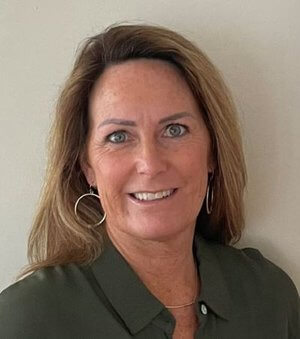 Deb Tyrrell, Creative Independents Human Resources Practice Leader, is a seasoned strategic partner in Human Resources consulting with more than 35 years of experience. For the past 25 years, Deb has worked exclusively in academic and mission-driven environments partnering with leadership to build strong, trust-based partnerships and to design thoughtful, sustainable policies, programs, and systems that support organizational effectiveness and maximize human potential.
 When I first encountered human resources in independent schools in 1995, I was startled by the simplicity of it all. After a long career in healthcare, with its robust, highly structured HR departments, I arrived at my first independent school and found little more than bare bones of a program. Payroll and benefits were handled on a part-time basis. Most human resources functions sat with the business officer—the person in the organization most responsible for counseling, benefit administration, and problem resolution on behalf of school administrators and staff.
That model was not a failure of intention. It was a reflection of scale. Independent schools were lean, relationship-driven communities. Faculty and staff knew one another. Many issues were resolved in the hallway, the business office, or after a quiet conversation with the head of school. Formal HR systems were often viewed as something larger institutions needed, not something a mission-driven school required.
The world has changed significantly since those days. Regulation has grown more complex. Employment expectations have risen. Faculty and staff now expect clarity, consistency, and timely support around compensation, benefits, leave, and workplace concerns. At the same time, automation—and now artificial intelligence—has transformed the industry. Concepts that once seemed institutional, such as self-service benefits, online employee assistance, and direct deposit, are now ordinary tools. Used well, they make HR a more seamless experience for independent school faculty and staff without stripping away the personal character that still defines school life.
What has not changed is the core work. Independent school HR is still about people: hiring and retaining mission-aligned colleagues, administering benefits fairly, resolving problems with discretion, and helping leaders navigate difficult conversations. What has changed is the need for reliable expertise. Many schools still do not have a full-time HR professional. Business officers, heads, and division leaders continue to carry this work alongside everything else. That is where timely counsel, practical systems, and shared best practices matter most.
Creative Independents is pleased to serve in the role of “HR on Duty” for NCAIS schools this year. We will provide regular newsletter articles of a timely nature, including payroll and benefits administration best practices, salary systems, problem-resolution skills, and the legal aspects of the field. Our team of experts will stand ready to support the colleagues who are “on duty” at your school and help you work through the year’s more complicated challenges.
In addition, NCIS is offering the “From Pencil to Practice” HR workshop on November 7. This full-day deep-dive into current HR issues will include legal counsel and technical experts, as well as time for those responsible for human resources in NCAIS schools to compare notes and discuss what is working. We will share case studies and hope that school administrators will bring forward some of the tricky situations that keep them up at night, so our team can address them in a practical, confidential way.
We look forward to spending this academic season with you. We will make ourselves available on an on-call basis whenever there is something we can help you with—whether that is a benefits question, a salary-structure puzzle, or a personnel issue that needs a steady second set of eyes.
Human resources in independent schools will never look exactly like HR in a hospital or a corporation. It should not. But it no longer needs to be improvised. With better tools, clearer practices, and a partner on duty, schools can protect their people, their missions, and their time.
About the Author
 Thom Greenlaw is the founder of Creative Independents, a Massachusetts-based consulting practice which has served hundreds of schools in the practices of HR, financial sustainability, executive search services, and enrollment feasibility. Thom can be reached at thom@creativeindependents.org.